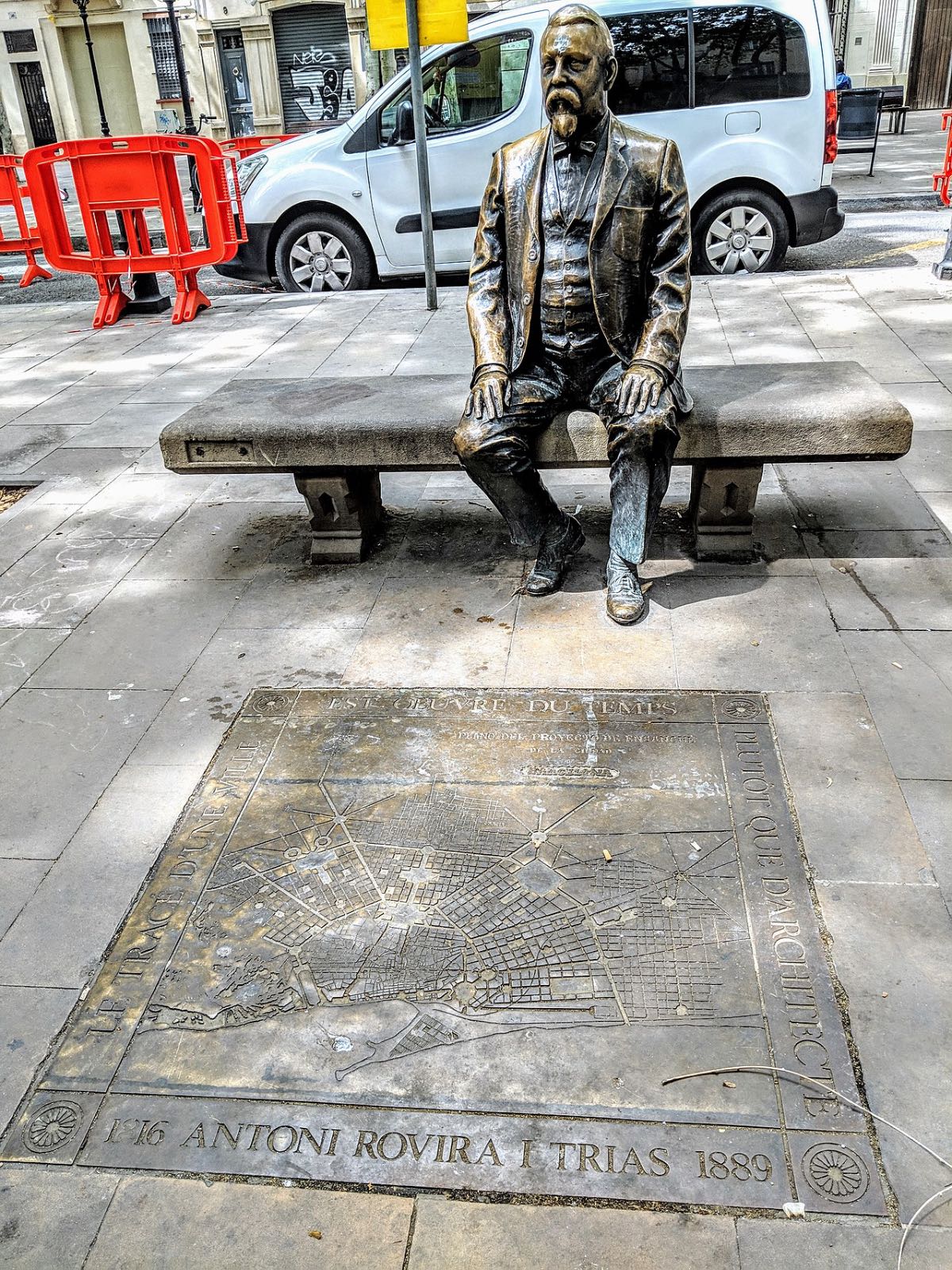
This statue honours Antoni Rovira i Trias , the architect who almost gave Barcelona a very different Eixample. If Cerdà represents the Barcelona we know today, Rovira represents the city that could have happened instead. In 1859, Rovira won Barcelona’s official expansion competition with a radial plan organised around the old city and Plaça de Catalunya. Compared with Cerdà’s grid, it was more hierarchical and monumental, closer to the logic of grand European capitals with clear centres, axes and social ordering. But his plan was not the one built. In 1860, the Spanish central government impo…
More in Barcelona
- Glimpse into the past of Consell de Cent
- Poblenou Superblock, Barcelona’s tactical first test
- The first Green Axis package, Consell de Cent
- The two blocks in Sagrada Família’s way
- Barcelona’s sponge-street corridor
- Ca La Trava, a reclaimed community garden
- A rooftop garden as social infrastructure
- Sant Antoni Superblock, from tactical test to permanent street